Clavo Huasca (Tynanthus panurensis, family Bignoniaceae) is a woody Amazonian vine whose Quechua name translates literally as “clove vine” — clavo (clove) refers to the bark’s warm, spicy scent, and huasca (rope or vine) describes its climbing habit. Also known as Tynanthus polyanthus in some taxonomic sources, it belongs to a small genus of lianas distributed across the lowland tropics of South America.
The most reliable identification marker is a distinctive cross-shaped pattern visible in the cross-section of the stem — a feature unique enough that local healers use it as a quality check when purchasing the bark. Additional features:
| Feature | Description |
|---|---|
| Growth habit | Woody climbing vine, reaching 10+ m |
| Leaves | Oval-to-lanceolate, glossy, opposite |
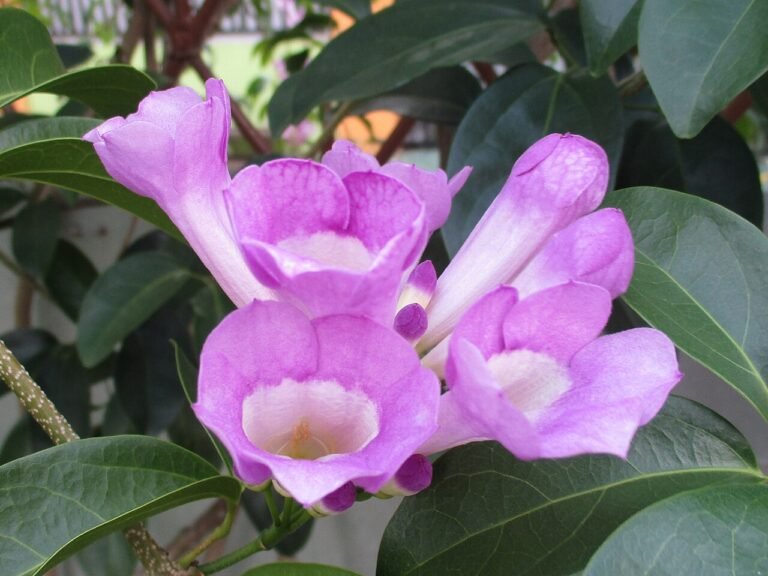
| Flowers | Small, white, tubular |
| Bark | Rough, grey-brown; strongly clove-scented |
| Stem cross-section | Distinctive cross / plus-sign pattern — key identification marker |
Clavo huasca has been used medicinally by Indigenous peoples across the Amazon basin for centuries. Its primary users include the Shipibo-Conibo, Bora, Yanomami, and related groups of Peru, Colombia, and Brazil. The bark, macerated in aguardiente (sugarcane spirit), is the most common preparation — taken as an aphrodisiac, a remedy for rheumatism and muscle pain, and as a digestive tonic. It also appears in veterinary folk medicine as a treatment for livestock exhaustion.
In the cosmology of Amazonian shamanism, clavo huasca occupies the role of a “plant teacher” — a spirit-being capable of transmitting knowledge during ceremony. It is considered a potentiator plant in the ayahuasca tradition: added to the brew to “open paths” between the drinker and other plant spirits. Some traditions describe the spirit of clavo huasca as feminine, associated with fertility and protection of the household.
Ritual harvesting requires spoken permission — an ícaro (healing song) addressed to the plant’s guardian spirit — before cutting. Legends in several Amazonian traditions describe the vine as an intermediary between the human world and the forest spirits, capable of revealing hidden knowledge to those who approach it with respect.
With the global spread of ayahuasca tourism from the 1990s onward, clavo huasca entered commercial herbal trade. It is sold in the markets of Iquitos (Peru), Pucallpa, and Manaus (Brazil) as a bark preparation, and increasingly as capsule supplements in the US and European wellness markets. This commercial interest has drawn the vine into broader debates over biopiracy and indigenous intellectual property.
Peruvian indigenous federations — notably AIDESEP — have fought attempts by pharmaceutical companies to patent compounds derived from Amazonian plants. Clavo huasca is cited in these contexts as a plant whose medicinal knowledge belongs to the communities that developed it over generations. The Peruvian government has enacted limited protections for traditional knowledge, though enforcement remains uneven.
At traditional doses, clavo huasca is considered non-toxic. No lethal cases from isolated use have been documented. Cautions apply when combining with MAO inhibitors (including in ayahuasca preparations), where pharmacological interactions are possible. Contraindicated during pregnancy and breastfeeding. Its long history of use by multiple indigenous groups without recorded fatality supports a reasonable safety profile for informed, moderate use.