Overview and Botanical Identity
Ajo Sacha (Mansoa alliacea, family Bignoniaceae) is a woody Amazonian vine whose name joins Spanish ajo (“garlic”) with Quechua sacha (“wild,” “of the forest”) — literally “wild” or “forest garlic.” When its leaves, bark or roots are crushed they give off a pungent garlic odour produced by sulphur compounds, yet the plant is botanically unrelated to true garlic (Allium); the resemblance is purely aromatic. Formerly classified as Pseudocalymma alliaceum, it is also known as bejuco de ajo or garlic vine, and grows throughout the lowland forests of the western Amazon.
How to Identify Ajo Sacha
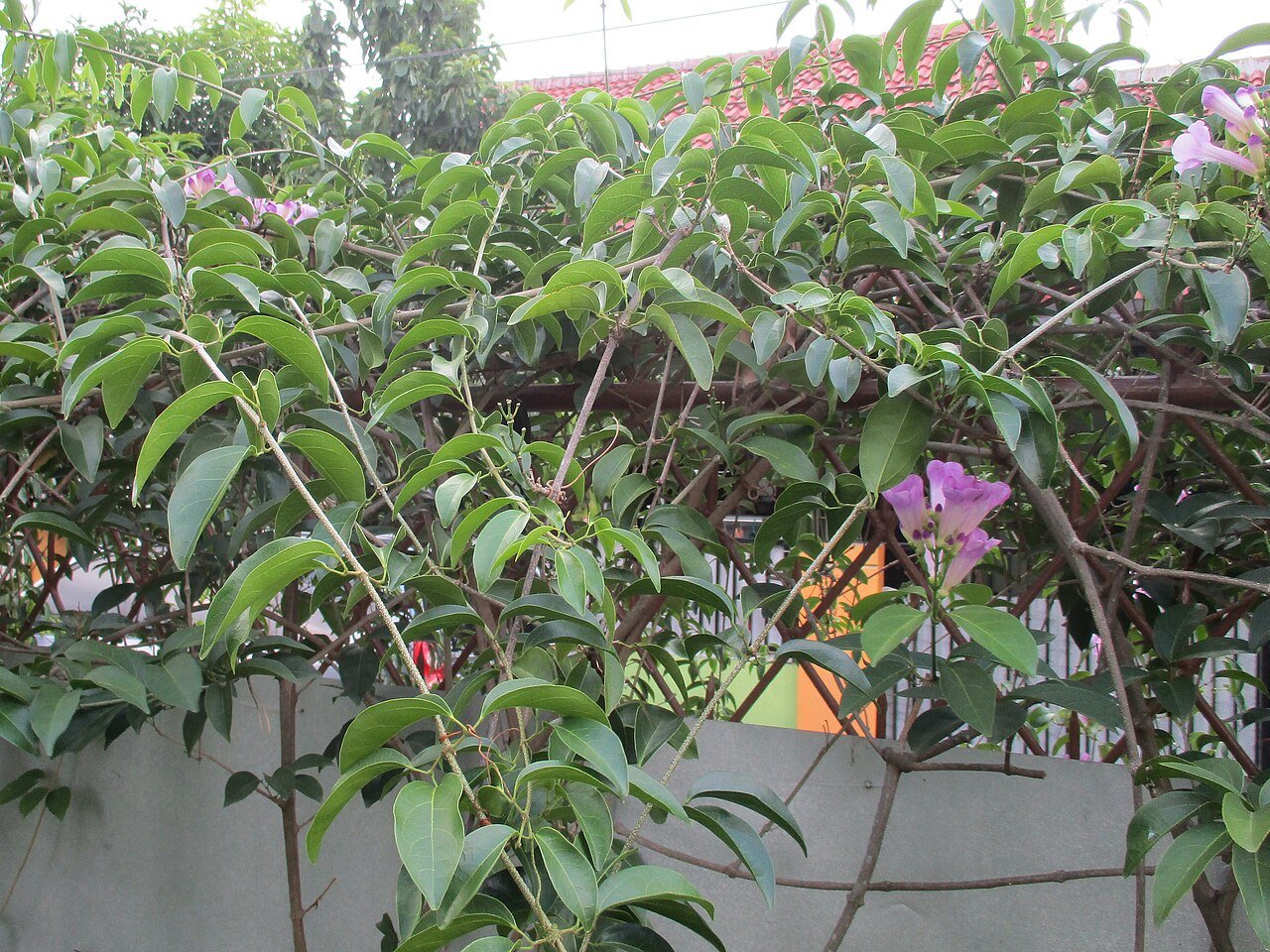
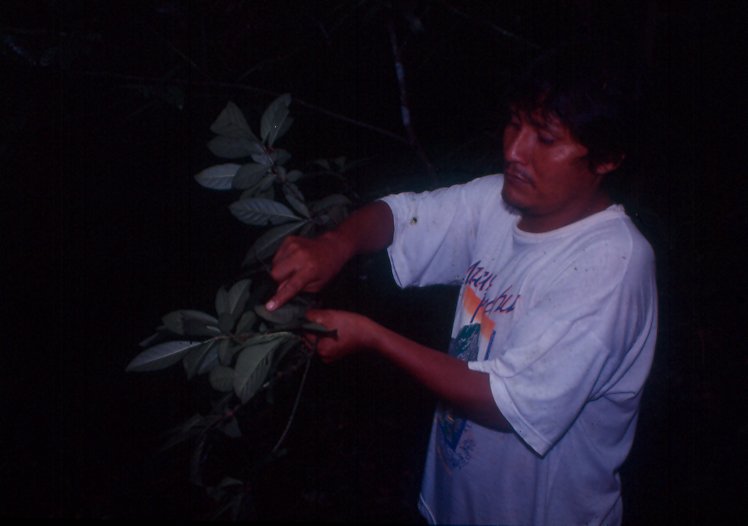
Ajo sacha is a scrambling, semi-woody liana or shrub of the lowland rainforest. Its opposite, compound leaves usually bear two leaflets with a slender terminal tendril, and the whole plant smells strongly of garlic when bruised — the quickest field test. The showy, trumpet-shaped flowers open a deep violet-purple and fade through lavender to near-white, so a single plant often displays several shades at once, a hallmark of the trumpet-vine family. It is found in Peru, Ecuador, Colombia, Brazil and Bolivia.
Where It Was Used
Across the western Amazon, ajo sacha is among the most valued medicinal and ritual plants. Curanderos and mestizo vegetalistas prepare leaf and bark decoctions and cleansing baths (baños) for rheumatism, arthritis, joint and muscle pain, fevers, colds, flu and cramps, and apply it as an anti-inflammatory rub. Above all it is a renowned planta maestra in the ayahuasca dieta — taken in seclusion to build physical strength, mental clarity and focus, and to gain “energetic” protection. Hunters bathe in it for luck and to clear away “bad air.”
Folklore and Shamanic Tradition
Ajo sacha is the great protective plant of the rainforest. It is believed to drive off mal aire (“bad air”), saladera (a clinging run of misfortune), envy and malign spirits. People plant it around their homes as a living guardian, carry it as a charm, and bathe in it to cleanse body and spirit. In the dieta, its teacher-spirit is said to grant courage, willpower and a clear, steady mind to those who commit to it.
Political and Economic Context
Ajo sacha is a staple of the Amazonian herbal economy — sold fresh and dried at markets such as Belén in Iquitos, bottled into tonics, and exported as a herbal supplement. It sits within the wider ayahuasca and ethnobotanical-tourism trade, and with it the politics of Indigenous and mestizo knowledge: rights over traditional remedies, fair benefit-sharing, and concerns about biopiracy when Amazonian plant knowledge is patented abroad. The plant itself faces no prohibition.
Safety and Legal Status
Ajo sacha is not a controlled or psychoactive substance, appears on no international lists of banned plants, and is sold legally as a herbal or dietary supplement in most countries. It is generally well tolerated in traditional preparations; as with any potent medicinal herb, caution is warranted during pregnancy or alongside prescription medication, and the formal dieta should be undertaken only with an experienced practitioner.