Overview and Botanical Identity
Bobinsana (Calliandra angustifolia, family Fabaceae) is a graceful Amazonian shrub or small tree that grows along the banks of rivers and streams throughout the upper Amazon. Also written bobinzana or bubinzana, the name comes from the regional Spanish of the rainforest. A member of the legume family and of the powderpuff genus Calliandra, it is best known to Amazonian healers as a great “teacher plant” (planta maestra) — a plant of the heart, of water, and of adaptability.
How to Identify Bobinsana
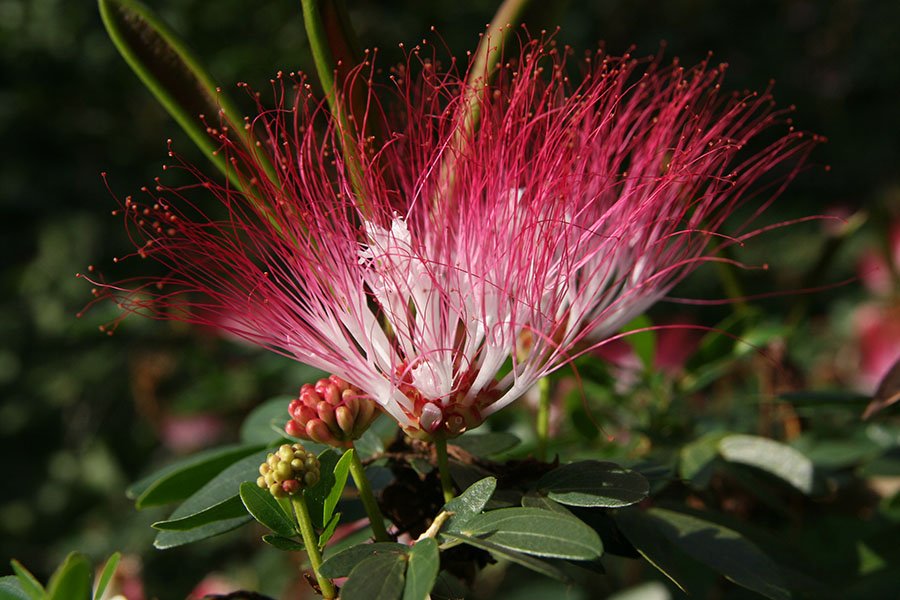
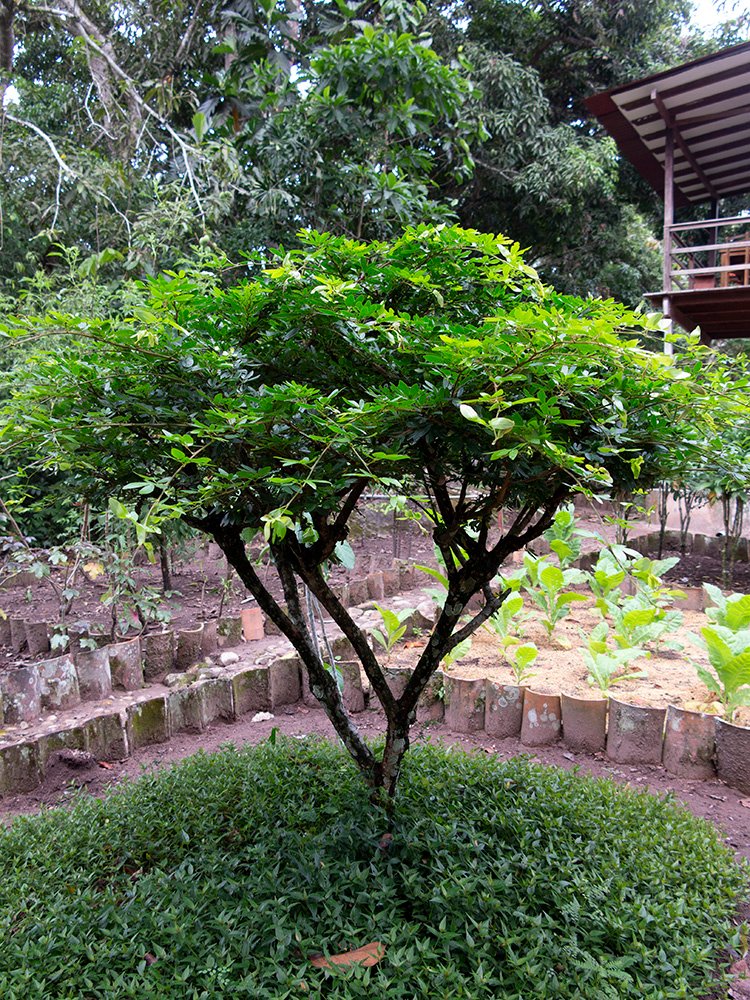
Bobinsana is a slender shrub or small tree, typically 2–6 metres tall, that favours riverbanks, sandbars and seasonally flooded ground. Its leaves are finely divided and feathery — bipinnate, like a mimosa — and its most unmistakable feature is the flower: a spherical pink-to-crimson “powderpuff” or pompom made of dozens of long, silky stamens, followed by flat legume pods. Because it roots in soft riverside soils and bends with the current without breaking, it is widely read as a plant of flexibility and flow. It occurs in Peru, Ecuador, Colombia, Bolivia and Brazil.
Where It Was Used
Throughout the western Amazon, curanderos and mestizo vegetalistas — and peoples such as the Shipibo-Conibo — work with bobinsana as both medicine and master plant. Bark and roots are macerated in aguardiente (cane spirit) or simmered into decoctions for arthritis, rheumatism, muscle and joint pain, colds and chills, and as a general tonic and immune stimulant. Its greatest renown, however, is as a planta maestra in the ayahuasca dieta: dieted in seclusion, it is said to open the heart, strengthen the body and the emotions, and deepen the practitioner’s connection to the forest and its spirits.
Folklore and Shamanic Tradition
In Amazonian plant lore bobinsana is, above all, the plant of the heart. Healers describe its spirit as gentle yet profound — grandmotherly, watery, rooted in feeling — and diet it to cultivate compassion, emotional resilience, vivid dreams and a sense of being grounded yet flexible, like the shrub swaying in the river current. It is associated with love, connection and the release of grief, and is sometimes taken to strengthen one’s bond with other teacher plants.
Political and Economic Context
Bobinsana is part of the Amazonian herbal and ceremonial economy. It is sold fresh and dried in regional markets, bottled into tonics and macerations, and increasingly exported as a herbal supplement to the global wellness and ayahuasca-adjacent market. This places it within the wider politics of the region: the rights of Indigenous and mestizo communities over their traditional plant knowledge, debates over fair benefit-sharing, and concerns about biopiracy as outside companies commercialise Amazonian remedies. No movement seeks to ban the plant — the disputes are over ownership of knowledge, not prohibition.
Safety and Legal Status
Bobinsana is not a controlled or scheduled substance, and it is not psychoactive in the way ayahuasca is; it contains no internationally prohibited compounds and is sold legally as a herbal or dietary supplement in most countries. It is generally regarded as gentle and well tolerated in traditional preparations, though — as with any potent medicinal plant — caution is advised during pregnancy or alongside prescription medication, and the formal dieta is best undertaken with an experienced practitioner.